

The National Education Policy 2020 made a declaration that should have sent shockwaves through the Indian EdTech industry: children should be taught in their mother tongue or local language until at least Class 5, and preferably beyond.
This is not a minor recommendation. It is a fundamental reorientation of India's education philosophy. For decades, English-medium instruction has been seen as the default for quality education, with vernacular-medium schools often perceived as inferior. NEP 2020 challenges this assumption directly, citing extensive research showing that children learn most effectively in their first language, particularly in the foundational years.
The policy implication is clear. But the market reality has not caught up.
The Research Behind Mother-Tongue Instruction
NEP 2020's emphasis on mother-tongue education is not ideological — it is evidence-based.
UNESCO has been advocating for mother-tongue instruction for over five decades, backed by research from dozens of countries. The evidence is consistent and robust: children who learn foundational concepts (literacy, numeracy, basic science) in their first language develop stronger cognitive foundations, better comprehension, and higher academic achievement compared to children who are forced to learn in a second language before they have fully mastered their first.
The reasons are intuitive. A child learning addition and subtraction has enough cognitive load managing the mathematical concepts. If they simultaneously have to process those concepts in a language they are still learning (English), the cognitive burden doubles. The mathematical understanding suffers — not because the child lacks mathematical ability, but because the language barrier consumes cognitive resources that should be directed toward mathematical reasoning.
Research from India specifically supports this. Studies by ASER (Annual Status of Education Report) have consistently shown that comprehension and learning outcomes are higher when instruction is in the child's home language. Children in Tamil-medium schools in Tamil Nadu, Marathi-medium schools in Maharashtra, and Bengali-medium schools in West Bengal perform better on comprehension tasks in their medium of instruction than they would in English — because the language is not a barrier to understanding.
The Digital Content Gap
NEP 2020 created a mandate. But it did not create the content to fulfil it.
The overwhelming majority of digital educational content in India is in English. The second largest pool is in Hindi. Beyond these two languages, the landscape is sparse. High-quality, curriculum-aligned, pedagogically sound digital content in Marathi, Tamil, Telugu, Kannada, Bengali, Gujarati, Malayalam, Punjabi, and Odia is extremely limited.
This creates an absurd situation. The policy says "teach in mother tongue." The schools say "we will." But when teachers look for digital resources to supplement their teaching — videos, interactive quizzes, VR experiments, AI tutors — they find almost nothing in their medium of instruction.
The gap is most acute in STEM subjects. There are some vernacular-language resources for language arts and social studies. But for Science and Mathematics — the subjects where digital and immersive tools add the most value — regional-language content barely exists.
Why the Gap Persists
The gap exists because the economics of vernacular content creation have historically been unfavourable.
Content creation requires investment — in subject matter expertise, production quality, curriculum alignment verification, and platform development. The perceived market for regional-language content was too small to justify this investment under the B2C model. A Marathi-medium content platform could not attract enough individual paying subscribers to cover its costs.
But the B2B/B2G model changes the equation. When the buyer is a state government, a school district, or a chain of vernacular-medium schools, the market is enormous. Maharashtra alone has thousands of Marathi-medium schools. Tamil Nadu has thousands of Tamil-medium schools. Each state represents a large, addressable market — if the content exists.
Abhigyaan's Approach
Abhigyaan was built for this reality. The platform delivers content in Marathi, Hindi, English, and Arabic, with more languages being added continuously. The AI Storyteller Teacher generates explanations in regional languages — not translated from English, but created natively in the target language with culturally appropriate examples and idioms.
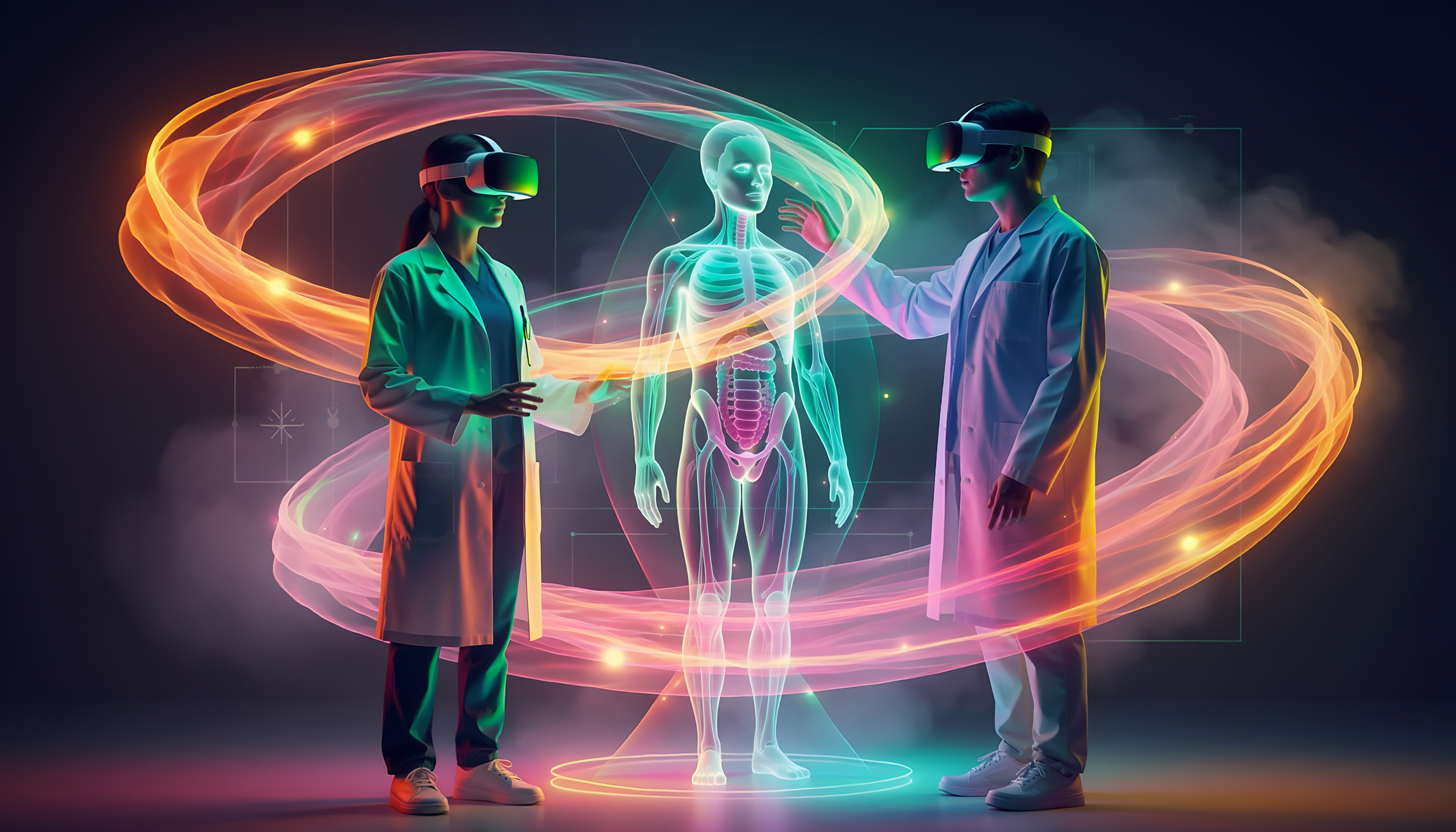
VR science experiments are available in Marathi, meaning that a student in a Zilla Parishad school in rural Maharashtra can perform a virtual chemistry experiment with instructions, explanations, and feedback in their mother tongue. This is not a "nice to have" — it is the difference between comprehension and confusion.
Abhigyaan Creator extends this further by providing a platform where regional-language content creators — teachers, experts, and studios who work in Indian languages — can publish content and earn from it. The marketplace creates the economic incentive for vernacular content creation that has been missing.
What Needs to Happen
Achieving NEP 2020's mother-tongue vision requires coordinated action on several fronts.
EdTech companies must invest in vernacular content as a core strategy, not an afterthought. The market is not "too small" — it is the largest untapped market in Indian education. State governments should fund and incentivise vernacular digital content creation through education budgets and CSR partnerships. Content creators who work in Indian languages must recognise the extraordinary opportunity and step forward — platforms like Abhigyaan Creator exist specifically to provide them with distribution and revenue.
Schools operating in regional languages should demand technology solutions that work in their medium of instruction. English-only platforms are not compliant with NEP 2020's language mandate, and schools should evaluate technology accordingly.
The mother-tongue principle in NEP 2020 is one of the policy's most powerful and evidence-backed recommendations. But it will remain an aspiration until the digital content ecosystem catches up. Building that ecosystem — in every Indian language, for every Indian student — is the work of this decade.