

Digital transformation is a term that sounds expensive, complicated, and disruptive. For most Indian school administrators, it evokes images of complete overhauls — replacing everything at once, training an entire staff overnight, and spending budgets that do not exist.
The reality can be much more manageable. Digital transformation for a school does not mean flipping a switch. It means taking a structured, phased journey from where you are today to where you need to be — at a pace that your teachers can absorb, your budget can sustain, and your students can benefit from.
This roadmap is based on the experience of deploying technology across 1,360 government schools in Maharashtra. It is designed for the real world of Indian education — not an idealised scenario.
Phase 1: Foundation (Months 1–3)
The first phase is about establishing basic digital infrastructure and getting your first wins.
Ensure internet connectivity. You need at least basic broadband or a reliable 4G connection for the school. If broadband is not available, a dedicated SIM-based 4G router is sufficient for most LMS operations. Abhigyaan's platform is designed for low-bandwidth environments and supports offline content pre-loading.
Set up a Learning Management System. Register your school, create teacher and student accounts, and organise your class structure in the LMS. This is the digital backbone that everything else will plug into. Start with a single platform that handles everything — content management, assessments, analytics, VR labs — rather than multiple disconnected tools.
Conduct foundational teacher training. A 2-day hands-on training programme covering the LMS dashboard, basic content navigation, assessment creation, and progress tracking. The goal is not mastery — it is familiarity and confidence.
Start with one smart classroom. If budget allows, install one smart display (TV or interactive board) in a shared classroom. Teachers can use this for presentations, video content, and VR casting even before VR headsets arrive.
Phase 2: VR Lab and AI Integration (Months 4–6)
The second phase introduces the immersive tools.
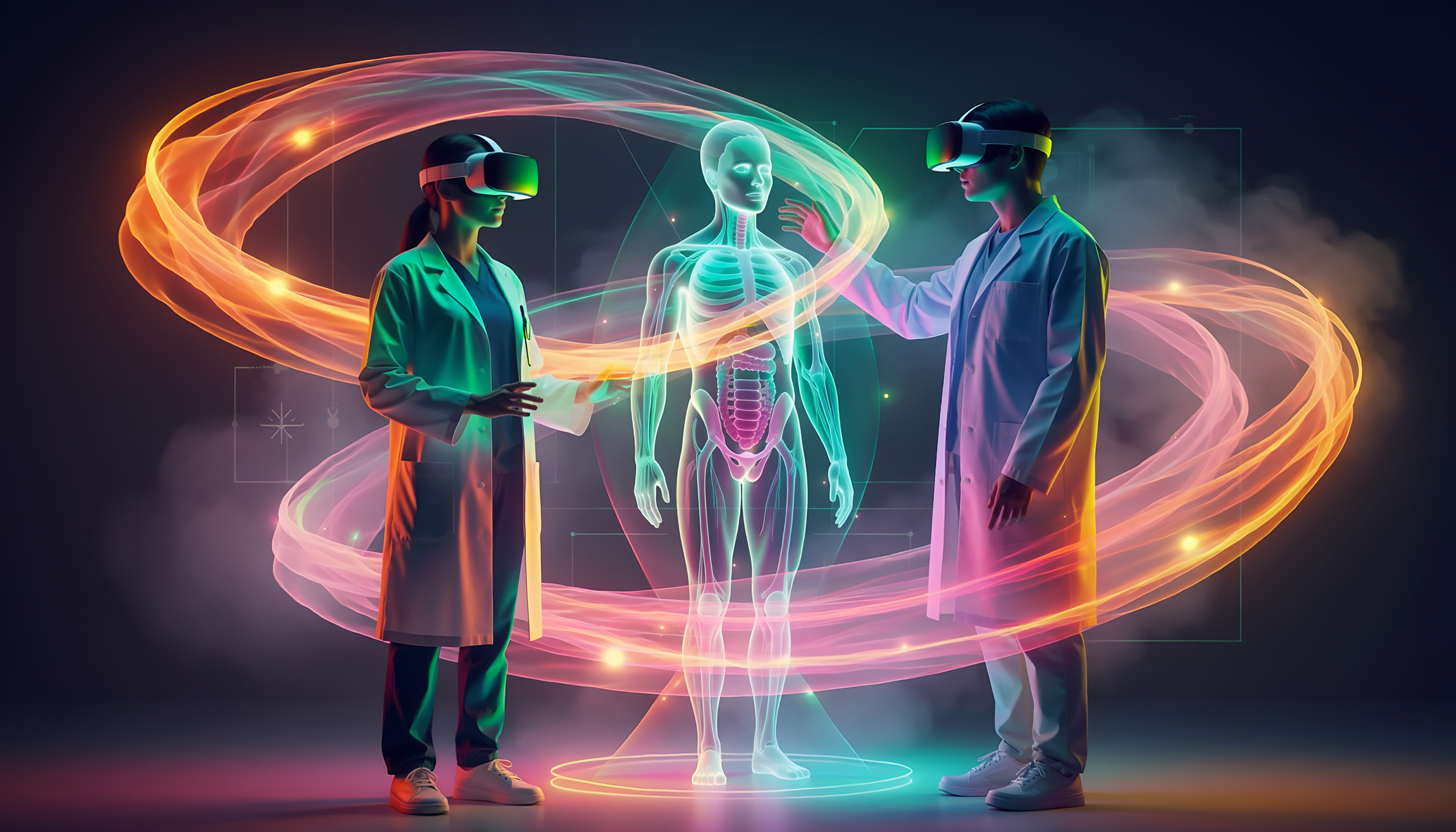
Install your first VR lab. One room, 8 headsets, a PC, a smart TV, and UPS backup. Begin with Science for Classes 8–10, where the impact is most measurable and the curriculum alignment is strongest.
Activate the AI Storyteller Teacher. Integrate the GenAI tutor into the daily workflow. Teachers guide the VR session; the AI teacher handles personalised explanation and doubt-clearing afterward.
Schedule VR sessions in the timetable. VR is not a reward or an occasional event. It is a regular instructional tool. Map specific VR experiments to the syllabus calendar so that VR sessions reinforce what students are learning in class each week.
Conduct the first analytics review. After one month of active use, sit down with teachers and review the data. Which students are engaging? Which are falling behind? Are quiz scores improving? This review establishes the habit of data-driven teaching.
Phase 3: Content and Assessment Expansion (Months 7–12)
The third phase expands the digital footprint across subjects and grades.
Add subjects beyond Science. History and Geography immersions, educational games for Mathematics, and language-learning tools extend the VR lab's utility beyond the Science department.
Access the Abhigyaan Creator content marketplace. Browse and purchase additional content modules from the creator marketplace — exam prep packs, regional language lessons, activity kits, and teaching guides. Deploy these directly into your LMS.
Implement regular analytics-driven interventions. Use the student analytics dashboard as a standard part of teacher workflows. Monthly reviews of student progress should become as routine as checking attendance.
Expand teacher capability. Conduct refresher training. Identify teachers who are ready for advanced features — content creation, quiz design, learning path customisation. Elevate champion teachers to peer-training roles.
Phase 4: Full Platform Adoption (Year 2)
The final phase achieves comprehensive digital integration.
Full LMS adoption across all classes and subjects. Every teacher, every class, every subject flows through the digital platform. Not as a replacement for classroom teaching, but as the backbone that organises, tracks, and enhances it.
Competency-based assessment using platform analytics. Move beyond exam marks as the sole measure of student performance. Use the continuous data generated by the LMS to assess skill mastery, learning progress, and competency development — aligned to NEP 2020 mandates.
Parent engagement through the platform. Provide parents with visibility into their child's learning progress through a parent portal or regular progress reports generated from the LMS.
Inter-school benchmarking for multi-school administrators. If you manage multiple schools (as a school chain, trust, or education officer), use the platform's analytics to compare performance across schools, identify best practices, and allocate resources where they are needed most.
Budget Planning: Phased Investment
The beauty of a phased approach is that it distributes cost over time and ties each investment to demonstrated value.
Phase 1 can be achieved with minimal investment: an internet connection and LMS subscription. Phase 2 introduces the VR lab, which represents the largest single capital expenditure. Phase 3 and 4 are primarily content and capability investments that build on the existing infrastructure.
The per-student cost for the full Abhigyaan platform — LMS, VR labs, AI teacher, and content marketplace access — works out to ₹199 per student per month. For perspective, this is less than the monthly cost of a single textbook.
Digital transformation is not an overnight revolution. It is a deliberate, phased journey that respects the reality of Indian schools — their budgets, their teachers, and their students. The schools that start today will be years ahead of those that wait.